
Italian Sourdough Starter – Lievito Madre

Italian Sourdough Starter – Lievito Madre Recipe is made a little bit different from the more well known version. This is a lower hydration starter which also takes longer to produce. But it is well worth it.
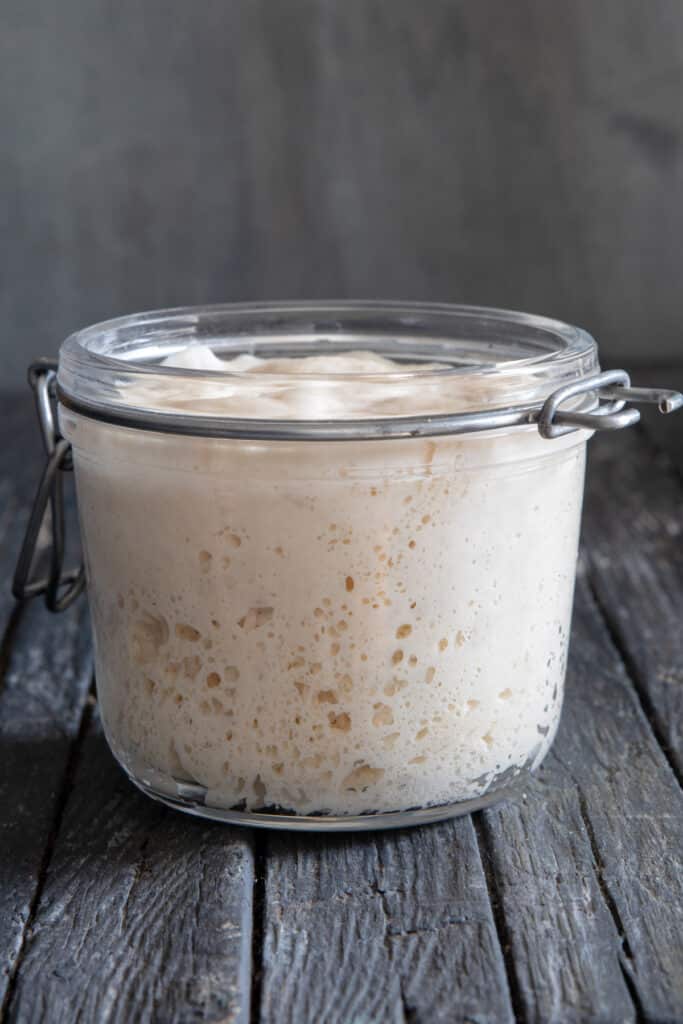
So after making a Sourdough Starter that most of us usually use, I decided that I wanted to also give the Italian version, Lievito Madre, a try. A friend explained how it is made, time is needed but it is very easy and straight forward.
what is the Difference between Traditional Sourdough Starter vs. Lievito Madre
When it comes to sourdough baking, there are two popular approaches: the traditional sourdough starter and lievito madre, an Italian-style fermented dough. While both are used to naturally leaven bread, they are different not only in hydration, but also flavor and maintenance.
Hydration Level – for traditional sourdough, starter is kept at 100% hydration, which it is fed with equal parts of flour and water by weight. The end result is a thick pancake like batter. Whereas the hydration level for lievito madre is much lower, usually around 50%, which means it is fed with two times the amount of flour than water. The end result is a stiff dough like consistency.
Flavor differences – the traditional sourdough starter has a tangy acidic flavor, whereas the lievito madre produces a milder and sweet flavor with less tang. This makes it perfect for making sweeter breads such as panettone and brioche.
Feeding the starter – a traditional starter is usually fed every 12-24 hours, of course this depends on the temperature and how often you bake. If refrigerated it can last up to a week without feeding. Mine has actually lasted a few months. On the other hand lievito madre should be refreshed every 4-8 hours during active baking time and kept in an airtight container, this helps prevent strength and prevents acid production.
Which should you use?
If you love rustic sourdough loaves with a strong tangy flavor and you like the idea of a more forgiving and easier process, then the traditional sourdough starter is for you. But if you are looking to bake not just everyday breads, but also enriched, festive breads with a subtle sweetness and light, fluffy crumb, then a lievito madre is your best choice.
How to make it
In a small bowl mix together the lukewarm water and honey, then add the flour and make a non sticky (but a little tacky) dough ball.
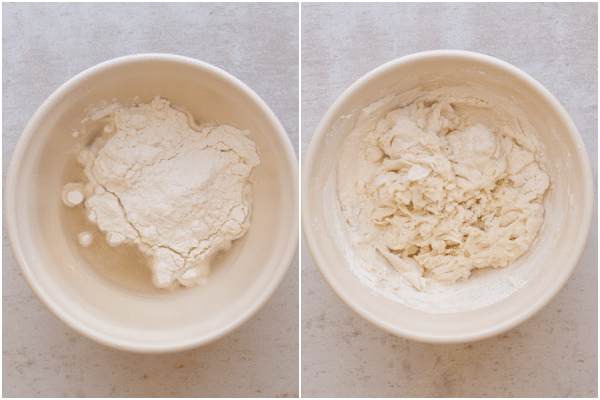
Mark with a cross. Then place in a large glass jar, place lid on top but do not close. Let sit in a warm draft free area for 48 hours.
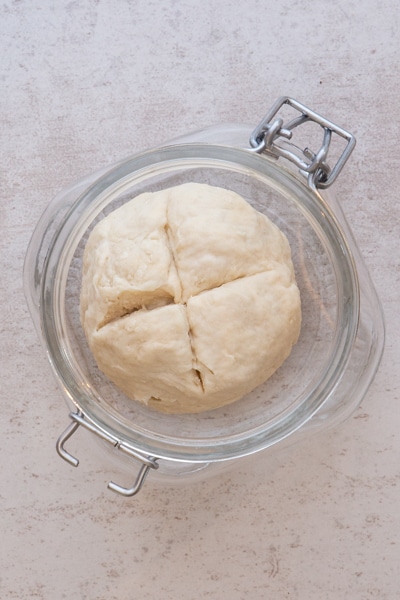
For the next four days, remove 100 grams of the dough, it’s best to remove the top part of the dough which tends to be dry, then keep 100 grams of the remaining dough (discard anything over the 100 grams), place in a bowl and add the flour and water, knead to form a compact dough, make a cross. Place in the jar (which has been cleaned, rinsed well and dried). Cover lightly and let rest again for 48 hours.
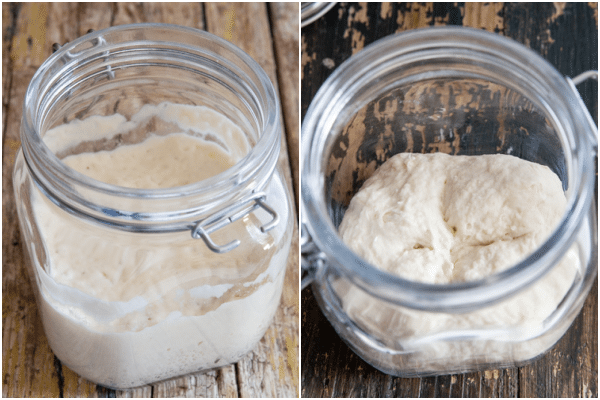
For the next 7 days remove 100 grams of the dough, it’s best to remove the top part of the dough which tends to be dry, then keep 100 grams of the remaining dough (discard anything over the 100 grams), place in a bowl and add the flour and water, knead to form a compact dough, make a cross. Place in the jar (which has been cleaned, rinsed well and dried). Cover lightly and let rest again for 24 hours.
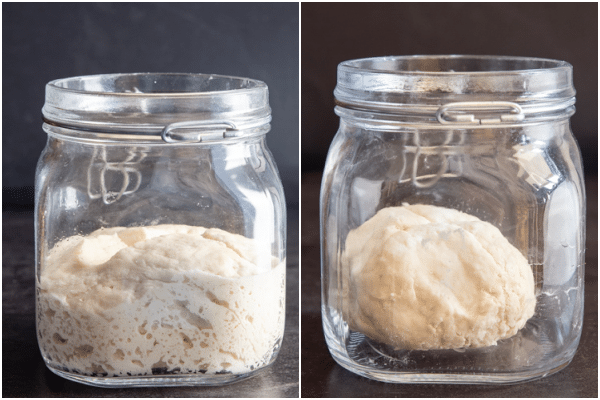
Ready to use!
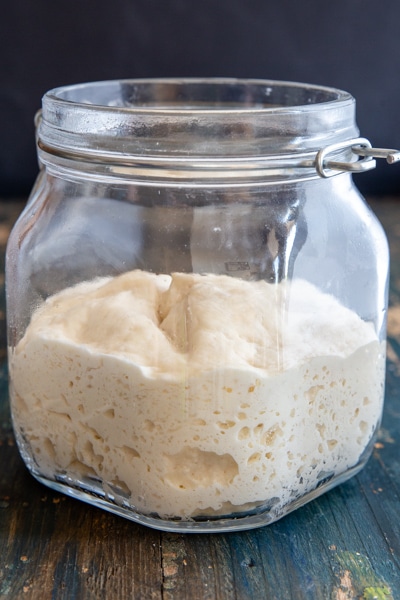
What equipment do you need?
To get everything set up to start, you are going to need, a good quality all purpose flour or bread flour (unbleached), chlorine free water (bottled or filtered), a scale – because I think working in grams is best for bread, a thermometer and a large jar with a lid. The best jar to use is a glass jar with a lid, it’s best to have one that is large enough that you can stick your hand in.
Why is a Natural Starter a better choice?
A natural starter or sourdough starter gives a more intense flavour to your bread recipe. You will also have a better developed crumb, which helps the bread to grow in height rather than width. It also has a better shelf life, this is because of the level of acidity of the dough which tends to inhibit most of the moulds, it also keeps its aroma for a longer period and has a more appealing crust colour.
Some people find (me included) that it is easier to digest because of the transformation of the more complex substances into simpler ones, therefore it makes it easier for our bodies to absorb.
Why make a cross in the dough?
The cross, according to popular superstition, was used to bless the dough of bread and to drive out demons or evil forces that would have hindered the leavening. In fact, it is said that having received from the Pope, the order to bless the loaves, Saint Clare made the sign of the cross on them. So a little Italian superstition never hurt!
What to do when the starter is active
Once the starter is active the first thing to do is give it a name, yes people name their starters. Then you can refrigerate the starter especially if you plan on baking bread about once a week. If you plan on baking everyday then the starter should be kept on the counter. And fed once a day.
How to store the Lievito Madre
Store it in a clean glass or another container that is suitable for food, it should be at least three times larger than the starter. Leave it in the refrigerator until the next use, remember to refresh it every 5-7 days at the most if not using.
How to refresh the starter
Remove the starter from the refrigerator and leave it at room temperature for an hour, if your house is cooler, then extend the time to about 2 hours. Eliminate the top layer of the dough, which may be dry and crusty. Remove 100 grams, add 50 grams of water and 105 grams of flour. knead the dough until you get a compact dough.
Engrave a cross on the dough and place it in the clean glass jar. Let it sit at room temperature until it has doubled (3-4 hours) then place it back in the fridge.
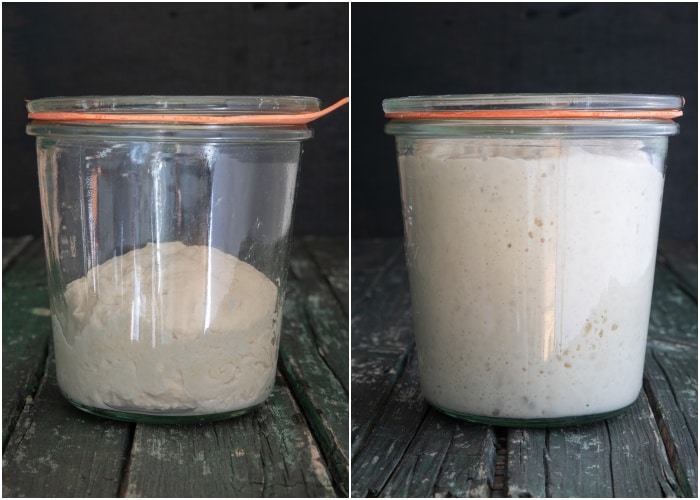
What is the best room temperature for the starter?
The starter should be kept in a warmish room, the best temperature would be anywhere from 70 – 85F (21-30C). Although my house is around 18C and it works just fine.
how fresh should lievito madre be to use
The freshness of lievito madre depends on the recipe and how you intend to use it.
For Baking Bread or Enriched Doughs – The lievito madre should be active and refreshed before use, which means it has been fed and allowed to ferment at room temperature for 3-4 hours or until it doubles in size.
Signs of freshness in Lievito Madre – The appearance should be smooth and elastic and a little firm because of its low hydration. It should have a pleasant, mildly tangy aroma with no off putting smells or extreme sourness. After feeding, it should have doubled or even tripled within 3-4 hours at room temperature. If it hasn’t, then repeat the feeding until it does. You may need to discard some of the dough before re-feeding.
recipe tips
- If the lievito madre has been left in the fridge for more than 5-6 days without a feeding, then it is best to feed it 2-3 times over 1-2 days.
- If you are using it to make enriched doughs such as panettone or colomba or even brioche then be sure that it is well refreshed in order to produce a strong fermentation.
- Having a fresh and active lievito madre will give you the best results in all your baked goods.
If i feed my lievito madre at noon when will it be ready to use and for how long
Usually the lievito madre, in a room temperature around 68-72F/20-22C, will be ready to use 4-6 hours after feeding, it should double or triple in volume and have a mild pleasant smell. If the environment is above 75F/24C then it will probably be ready sooner, 3-4 hours. If your home is cooler (like mine) 68F/20C it could take 6-8 hours or longer to double.
You will know it’s ready when it doubles or triples in volume, feels elastic and soft with no dry or hard spots on it, it should have a mild, slightly tangy aroma. You can test it by dropping a piece of dough into a bowl of water, if it floats, it’s ready for use.
The starter will hold its peak for about 2-3 hours after doubling or tripling in volume. After 3-4 hours it may start to deflate slightly because fermentation will slow down. It can still be used but leavening might not be as strong.
For example if you feed the starter at noon, then it should be ready between 4:00 – 6:00 pm (depending on the room temperature). The best time to use it would be between 4:00 – 8:00 pm, right at its peak and slightly over.
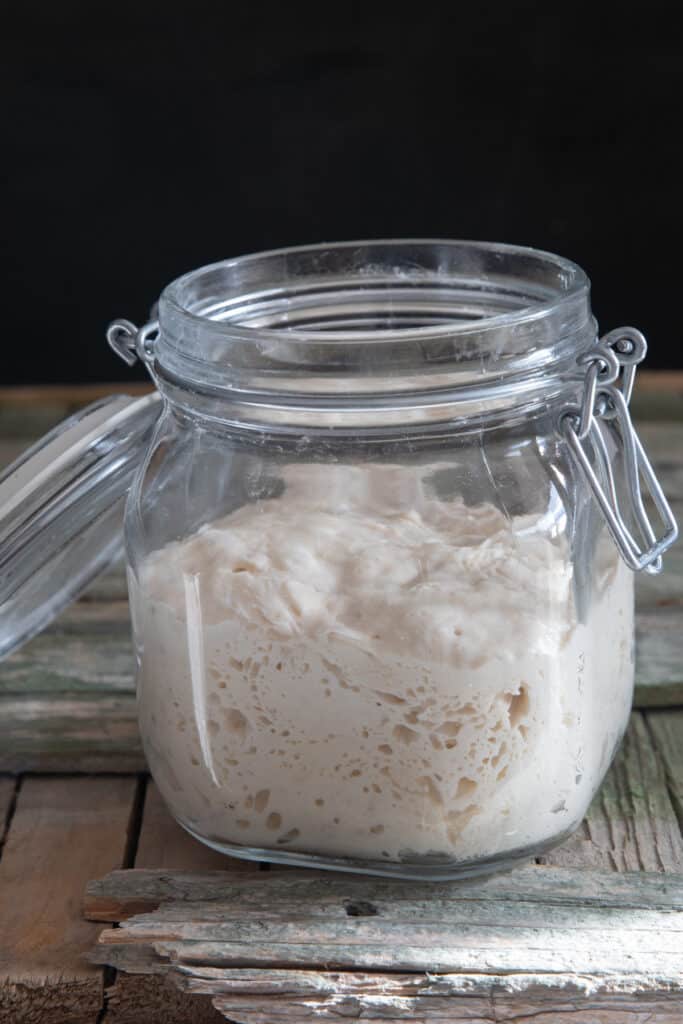
recipe tip
If you don’t use it immediately when it’s ready, then be sure to refrigerate it after it reaches its peak this will help slow down fermentation. It can be kept in the fridge for up to 24 hours and you can use it directly from cold for most recipes. For enriched doughs such as panettone or brioche it always best to use a starter at its peak.
Why is the starter dough discarded?
The starter is discarded so that there is less flour needed to maintain it. If you just added the same amount of flour each time you refresh the starter (without removing any starter), you would eventually come to a point where the added flour is not enough to refresh the starter and it would starve. The starter is not a real starter until you have arrived at about step 9 or 10 and sometimes longer. It takes time for the organism balance to get established.
How Long Can Lievito Madre Discard Be Used?
For longer storage, freeze the discard in an airtight container or freezer bag. It can be kept frozen for up to 3 months. Thaw in the refrigerator before use. Discard kept at room temperature should ideally be used within 6-8 hours of being removed from the starter, as it will continue to ferment and may become overly acidic or inactive. Discard stored in the refrigerator can last for up to 4-5 days, provided it smells pleasant (mildly tangy but not overly sour or foul) and hasn’t developed mold or discoloration.
recipe tips
- If you’re using lievito madre discard in recipes like pancakes, waffles, crackers, or flatbreads (where leavening is less critical), it doesn’t need to be freshly fed.
- Discard that’s 1-3 days old, stored in the fridge, and still smells pleasant (mildly tangy, not sour or spoiled) is perfectly fine to use.
- Discard should not have any mold or an off color. A slight liquid layer (hooch) on top is normal and can be stirred back in.
What to make with discarded starter
Lots of people, me included, would rather not throw away food, (but unfortunately you will have to eliminate some of that starter at the beginning), and that goes for discarded starter. A fast and simple one is frying it, sprinkle with your favourite spices and fry in some oil. You could share it with friends once it is developed or you could make chocolate chip cookies.
I started to use the discard after day 10, or you could refrigerate it and keep adding the discard until you have enough for a recipe (recipes to follow). It is best used within 3-5 days.
How to substitute lievito madre for dry yeast
Approximately 5-6 grams of dry yeast or 12-15 grams fresh yeast which is equal to 100 grams of lievito madre. So if my lievito madre using 33 grams of water and 67 grams of flour, because of the 2 for 1 ratio of flour versus water, then you need to adjust your recipe by using 33 grams less water and 67 grams less flour. Of course rising times will also be longer.
recipe tips
- Be sure to feed your lievito madre before using in the recipe.
- Be aware of the hydration of the dough, if needed add small amounts of water or flour during mixing to achieve the desired dough consistency.
- You will find that there is a milder and more complex flavor compared to yeast-based doughs.
When to add extras to the dough
When adding extras such as nuts or even chocolate chips to a lievito madre dough it is best to add after the first rise, adding them too soon can affect the rise of the dough. Be sure to add them gently, this will help prevent damaging the dough’s gluten structure and will ensure an even distribution. Be sure to use only 15-20% of the weight of the flour.
How to add the mix-ins to the risen dough
Transfer the dough to a lightly floured flat surface and gently press the dough into a rectangle with your finger, the rectangle should be about 1/2 inch (1-2 cm) thick. Sprinkle the mix-ins on top of the dough, then tightly roll up the dough from the long end, then fold the dough like an envelope.
Gently fold the dough a few times to distribute the chips or nuts evenly, be sure you don’t over work the dough as this could disrupt the gluten development. Let the dough rest for 10-15 minutes, then shape into the desired form (loaf, rolls or boule). Cover and let the dough proof as per the recipe instructions.
recipe tips
- Be sure you don’t add too many mix-ins as this can make it harder for the dough to rise and bake evenly.
- Make sure that the nuts and or chips are well hidden in the dough so they don’t burn while baking.
- Try to chill or even freeze the chocolate (20-30 minutes) before adding to the dough, this can help it maintain its shape and prevent it from melting into the dough too soon.
- Be sure to spread the mix-ins evenly so that they aren’t clumped together.
Recipes with Lievito Madre
- Focaccia with Lievito Madre
- Rustic Italian Bread
- Lievito Madre Pizza Dough
- Click here for more recipes
- Lievito Madre Cinnamon Buns
- Lievito Madre Mother in Law Tongues
- Lievito Madre Discard Gingerbread Cake
- Lievito Madre Discard Pasta
- Lievito Madre Cruffins
If you decide to try this Italian Sour Dough Starter – Lievito Madre Recipe, I hope you enjoy it and let me know how it goes. Enjoy! I have quite a few more recipes to follow!
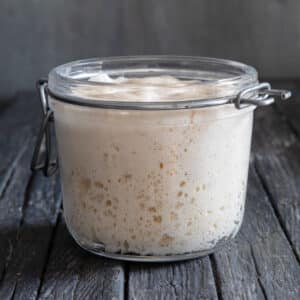
Italian Sour Dough Starter – Lievito Madre Recipe
Ingredients
STEP 1
- 105 grams all purpose or bread flour (unbleached)* (¾ cup + 1 tablespoon)
- 50 grams water lukewarm chlorine free water (85F/40C) (3⅓ tablespoons)
- 1/2 teaspoon honey
STEP 2 -11
- 105 grams all purpose or bread flour (unbleached)
- 50 grams water lukewarm chlorine free water (85F/40C)
*My daughter and I have discovered that a high protein flour (bread flour) with at least 14% protein is what the lievito madre grows best on. When using the LM for baking the type of flour can be the lower protein type of flour.
Instructions
STEP 1
- In a small bowl mix together the lukewarm water and honey, then add the flour and make a non overly sticky dough ball, it should be a bit tacky. Mark with a cross. Then place in a large glass jar, place lid on top but do not close. Let sit in a warm draft free area for 48 hours.
STEP 2
- Remove 100 grams of the dough, it's best to remove the top dry part of the dough, then keep 100 grams of the remaining dough (discard anything over the 100 grams), place in a bowl and add the flour and water, knead to form a compact dough, make a cross. Place in the jar (which has been cleaned, rinsed well and dried). Cover lightly and let rest again for 48 hours.
STEP 3
- Again remove 100 grams of the dough, it's best to remove the top dry part of the dough, then keep 100 grams of the remaining dough (discard anything over the 100 grams) place in a bowl and add the flour and water, knead to form a compact dough, make a cross. Place in the jar (which has been cleaned, rinsed well and dried). Cover lightly and let rest again for 48 hours.
STEP 4
- Again remove 100 grams of the dough, it's best to remove the top dry part of the dough, then keep 100 grams of the remaining dough (discard anything over the 100 grams), place in a bowl and add the flour and water, knead to form a compact dough, make a cross. Place in the jar (which has been cleaned, rinsed well and dried). Cover lightly and let rest again for 48 hours.
STEP 5
- Again remove 100 grams of the dough, it's best to remove the top part of the dough, then keep 100 grams of the remaining dough (discard anything over the 100 grams), place in a bowl and add the flour and water, knead to form a compact dough, make a cross. Place in the jar (which has been cleaned, rinsed well and dried). Cover lightly and let rest again for 24 hours.
STEP 6
- Again remove 100 grams of the dough, it's best to remove the top part of the dough, then keep 100 grams of the remaining dough (discard anything over the 100 grams), place in a bowl and add the flour and water, knead to form a compact dough, make a cross. Place in the jar (which has been cleaned, rinsed well and dried). Cover lightly and let rest again for 24 hours.
STEP 7
- Again remove 100 grams of the dough, it's best to remove the top part of the dough, then keep 100 grams of the remaining dough (discard anything over the 100 grams), place in a bowl and add the flour and water, knead to form a compact dough, make a cross. Place in the jar (which has been cleaned, rinsed well and dried). Cover lightly and let rest again for 24 hours.
STEP 8
- Again remove 100 grams of the dough, it's best to remove the top part of the dough, then keep 100 grams of the remaining dough (discard anything over the 100 grams), place in a bowl and add the flour and water, knead to form a compact dough, make a cross. Place in the jar (which has been cleaned, rinsed well and dried). Cover lightly and let rest again for 24 hours.
STEP 9
- Again remove 100 grams of the dough, it's best to remove the top part of the dough, then keep 100 grams of the remaining dough (discard anything over the 100 grams), place in a bowl and add the flour and water, knead to form a compact dough, make a cross. Place in the jar (which has been cleaned, rinsed well and dried). Cover lightly and let rest again for 24 hours.
STEP 10
- Again remove 100 grams of the dough, it's best to remove the top part of the dough, then keep 100 grams of the remaining dough (discard anything over the 100 grams), place in a bowl and add the flour and water, knead to form a compact dough, make a cross. Place in the jar (which has been cleaned, rinsed well and dried). Cover lightly and let rest again for 24 hours.
STEP 11
- Again remove 100 grams of the dough, it's best to remove the top part of the dough, then keep 100 grams of the remaining dough (discard anything over the 100 grams), place in a bowl and add the flour and water, knead to form a compact dough, make a cross. Place in the jar (which has been cleaned, rinsed well and dried). Cover lightly and let rest again for 24 hours.
STEP 12
- Ready to use!
Notes
Recipe Tips
I would use a jar at least 24 ounces (3 cups) or 680 grams. The dough ball should not be overly sticky although it will be a bit tacky. If it is too dry then add a bit more water. Different flours absorb water differently.How to convert regular starter to Lievito madre?
For example take – 100 g regular sourdough starter feed it with 200 grams strong flour (high protein) and 90 g lukewarm water, mix and knead into a firm dough, it should feel smooth, not sticky (a bit tacky), and hold it’s shape. After 8–12 hours (or when risen), take 100 grams from the centre (remove the top dry part), feed again with 200 grams flour and 90 grams of lukewarm water. Repeat the process after 8-12 hours. After 2–3 feeds it starts behaving like LM. After 3–5 feeds it becomes stable and ready to use.Nutrition
Updated from October 11, 2020
It’s All About Pasta
Amazing pasta recipes to make your mouth water!

Authentic Italian Desserts
75 Traditional Desserts Made Easy
Hi Rosemary
Finally at Step 12.
Now if I want to make a bread, thus is what I understand:
Take 100gm of the starter and I can follow the recipe for the Rustic Bread.
What do I do with the leftover starter? Can I keep it the way it is for the next time I make bread? Or do I have to feed it like I did with the starter?
Hi Ersilia, you should fee the starter, next time you use it, remove 100 grams and fee that the remaining if you make bread often then you can you it to make recipes with unfed starter or also called leftover starter dough recipes. Hope that helps. Take care. Let me know how it comes out.
Hi, in the first step you indicate to take 100 grams of flour and then after 48 hours select 100 grams and again add 100 grams of flour and water to the remaining 100 grams of dough. Are you okay with the math or the recipe?
Hi Tamazi, yes I am, I actually say to remove 100 grams of the dough, it’s best to remove the top part of the dough which tends to be dry, then keep 100 grams of the remaining dough (discard anything over the 100 grams), I don’t understand what you are saying.
Hi – if you use Einkorn flour for the starter would you need to adjust the recipe?
Hi Joanne, you may need about 15-20% less water, so going by the photos start with less water and add a bit more if needed. Let me know how it goes. Take care!
Hi Rosemary, just getting started with the starter. On step 2 , however, my dough looks the same as when I placed it in the jar to begin with. No bubbles or rising of any kind… will that come later or did I do something wrong?
Hi Pam, yes it will take a bit for the starter to start bubbling. Let me know!
I have had my LV going for the past few months and was wondering about making cinnamon buns with it. Is there a recipe for it that you know of or some formula for substituting higher hydration sour doughs with LV. I prefer the much milder taste with sweet breads.
Hi Cathy, I really don’t have one for LM but what I would do is use a regular sourdough recipe if you check theclevercarrot.com she is very good for sourdough starter dough recipes, the only thing that you will have to do is increase the liquid a bit for the recipes. Some say 1/3 extra of liquid, but you might want to start with less and add more if needed to reach the type of dough necessary. I hope that helps. Let me know. Take care.
Hi! How do I keep some of future use? Do I need to feed 1x day forever or how to I save to use once a week? Thanks!
Hi Gia, you can feed it once a week, but you may need to feed it more than once when you do want to use it. 🙂
Hi Rosemary 😊
What a wonderful recipe. So we’ll explained and thorough. I want to make the LM to make panettone. The only obstacle for me is the waste. With my sourdough I use the discard to make pancakes or waffles so there’s no waste. Are there other things I can do with the discard from LM? Thanks in advance. Chris
Hi Chris, if you go to https://breadsandsweets.com/ , it was my 2nd site and is now my daughter’s and search discard, there are a few recipes, including biscuits, focaccia, pie crust and Lemon ricotta cookies (maybe a couple more), it does use regular sourdough discard, but just add a bit more liquid. Hope that helps. Let me know. Take care!
Hi I’m on step 10 and the dough is always very sticky , don’t know how to explain it. is this normal. I don’t want to use it to make a panettone if it didn’t come out right
Hi Filomena, if it’s very sticky (does it look like the pictures?), add a bit more flour, if it’s active and bubbly it should be fine. Let me know.
Just confirming. You feed: 100g starter, 105g flour, and 50g water?
Hi Aimee, yes that is correct. Take care!
So I made a mistake and followed the directions and fed mine every 48 hours instead of switching to 24 at a certain point. Does that mean I need to feed mine every 24 hours for a while or do you think it’s still ready to use?
Hi Aimee, if it has doubled and grown and there are lots of bubbles, then yes it should be ready, if not you could feed it again just to strengthen it. Let me know. Take care!
So when you feed LM, you don’t add honey each feeding?
Hi Aimee, no I don’t honey. 🙂
Hi Rosemary,
I made panettone using Giorilli’s panettone recipe with your LM. It worked beautifully! My next project is making Bialys. The recipe i have is a scaled down version of Kossar’s in NYC. The recipe calls for 1/2 oz of fresh bakers yeast, which is difficult to find these days! Do you think I could substitute your LM for the yeast? If so, how much of the LM would equal 1/2 oz of the bakers yeast? Thanks for all your help!!
Chuck
Hi Chuck, that’s great, so glad it turned out so well. So these amounts are interchangeable 5-7 grams of dry yeast / 12-15 grams of fresh yeast / 100 grams of sourdough starter. Be sure to adjust for water and flour if using sourdough starter. So for example if your 100 grams of sourdough starter uses 50 grams of water and 50 grams of flour then use 50 grams of water and 50 grams of water less in the recipe. Let me know if this makes sense. 🙂 So 1/2 ounce of bakers yeast would equal 14 grams which would be 100 grams of starter.
Hi Rosemary,
I have made the LM following your recipe and it has gone beautifully! I want to store it in the fridge. Do I do the normal daily refreshment and then put it in the fridge or do I wait awhile after the refreshment and then put it in the fridge? I hope to make panettone this week. I will let you know how that goes. Thanks for all your help!
Chuck
Hi Chuck, you should wait a couple of hours until it has risen and then refrigerate. When you take it from the fridge, let it sit for about 30 minutes then refresh. Glad I could help. Let me know how it goes. Take care!
Thanks for such a complete and thorough recipe for LM.
I want to try making panettone for the first time. I’m not very familiar with sourdough starters, but I do know that here in San Francisco, CA the air contains a unique form of yeast. Would the resulting LM be too sour if I simply use SF air, or should I initiate the process using a commercially available dry yeast ?
Thanks !
Hi William, you’re welcome, lucky you I have heard San Francisco has one of the best sourdough starters available. I would try it with that, I imagine it would be amazing. I actually have a sourdough starter that using a bit of yeast to start it you could check that out. https://breadsandsweets.com/sourdough-starter-with-yeast/ . Let me know. You have piqued my interest, I may give it go this year too! 🙂
Hi Rosemary, I would like to use your LM to make panettone. The recipe I use calls for refreshing the levain/starter 3 times in one day throughout morning and afternoon (example, 8AM, noon, and 3PM), and then make first panettone dough in evening at 8PM. Would you please walk me through this 3 refreshment process? How much flour,water and LM do I use for each refreshment? Is your LM a 100% hydration or a 45% hydration? Thank you for your help!
Hi Chuck, well it depends on how much starter you need for the recipe. So I am looking at one that says the same as yours, it calls for 125 grams of LV, I would stick to 100 grams and refresh it with 50 grams of water and 105 grams of flour, knead the dough until you get a compact dough. Do that 3x with only 100 grams, then remove however much you need for the recipe, the rest, refrigerate. The discard you could make chocolate chip cookies – https://anitalianinmykitchen.com/lievito-madre-chocolate-chip-cookies/. Or something else you find. Lievito madre is around 50% hydration. Let me know how it goes or if you have anymore questions. Take care!